
Our theme for June’s theme wall is focused on water. And it couldn’t come at a better time in the year than when the temps climb towards 100 degrees and we daydream of getting out on a lake or river. Water is a vital element and without it we wouldn’t be here. It’s also one of the most beautiful, complicated and elusive images to capture. Below are three very different artists who are famous for doing just that:
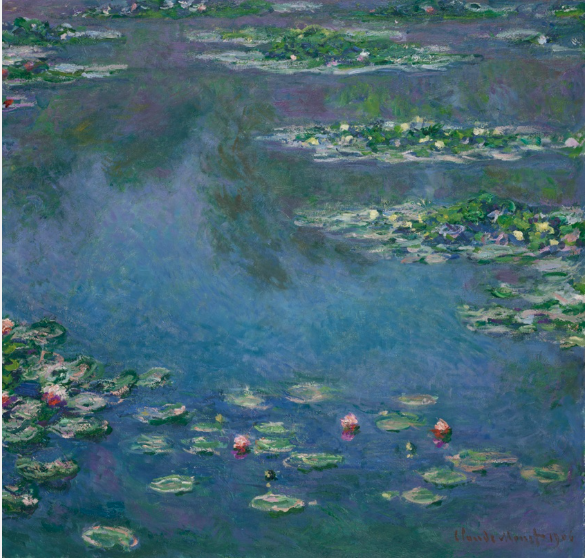
Most well-known today for his series of serene water lilies paintings, 19th-century Impressionist Claude Monet was a groundbreaking tour de force in the development of expressive art. Throughout his long life, which spanned the years between 1840 and 1926, Monet would progress from drawing amusing caricatures of friends to capturing the elusive nuances of natural scenes in various attitudes of light and color. Along with the other Impressionists, Monet’s aim in his painting was to capture reality and analyse the ever-changing nature of light and color. He recorded his surrounding faithfully, from the grime of a Paris railway station to the incandescent beauty of his later paintings based on the gardens he created at Giverny in north-eastern France. Frequently exhibited and successful during his lifetime, Monet’s fame and popularity soared in the second half of the 20th century when he became one of the world’s most famous painters and a source of inspiration for burgeoning groups of artists. By striving to translate his unique perception of the natural world directly to the canvas, Claude Monet was instrumental in forging an entirely new direction for the world of art.
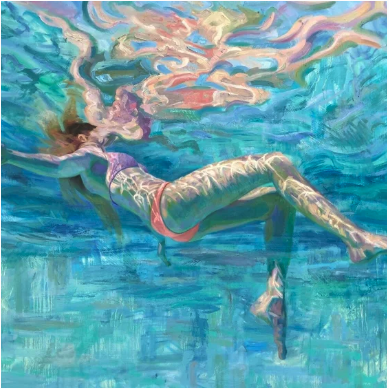
Isabel Emrich is a current day contemporary artist who works in an Expressionistic style that straddles both abstraction and figuration. Her brushwork is both strong and fluid – qualities that echo the nature of water, itself. With zeal, Emrich captures the ‘special effects’ water presents to the eye: chaotic refractions in multi-planar space, sparkling light effects, distorted shadows, rippled reflections, etc. – much of it in thick impasto paint,contrasted by passages of smooth vitality. Emrich forged her connection to the water growing up in Southern California. She loved the feeling of the cold salty ocean, and being under its big waves. Isabel offers a special debt of gratitude to her grandmother, who often took her up on the cliffs overlooking the water to plein-air paint. “Just paint what you see,” her grandmother would tell her, taking after the French Impressionists of yore.
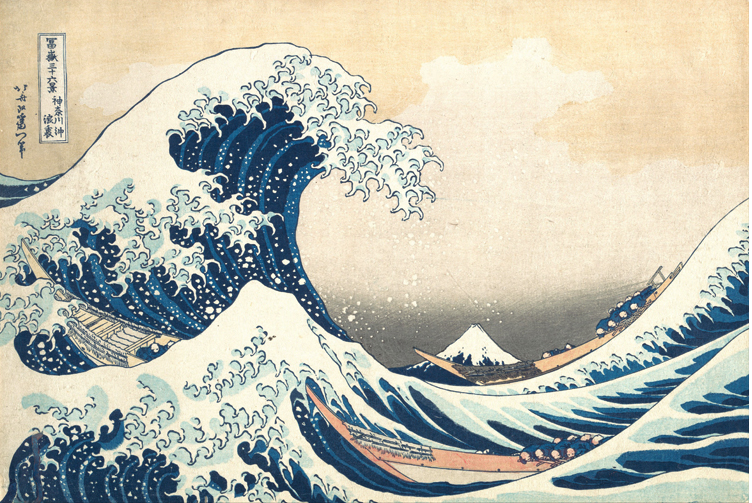
Katsushika Hokusai (1760–1849) was a Japanese ukiyo-e artist, painter, and printmaker, best known for his iconic woodblock print The Great Wave off Kanagawa (1831). Active during the Edo period, Hokusai produced a vast body of work that included landscapes, nature studies, and scenes of everyday life. His most famous series, Thirty-Six Views of Mount Fuji, reflects his fascination with the mountain and showcases his innovative use of perspective and bold composition. Hokusai had a profound influence on both Japanese art and Western artists, particularly during the Japonisme movement in 19th-century Europe.